Instructional Design
Design Documents

Design Process:
I developed a realistic training scenario based on common customer service challenges in the airline industry, specifically, how new flight attendants respond to challenging passenger interactions. In the design phase, I used backward design and adult learning theory to define practical learning goals and align the course with real challenges flight attendants face on the job. I built the simulation in Articulate Storyline, using scenario-based learning and branching interactions to encourage reflection and support behavior change. This document outlines the full instructional design approach behind the course.
Design Process:
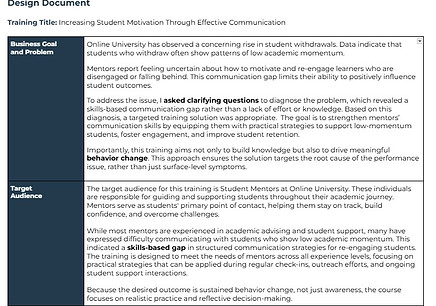
I started by asking clarifying questions and defining a realistic performance gap based on typical issues faced by mentors in higher education, specifically, the challenge of engaging students with low academic momentum. Through this process, I diagnosed a skills-based gap in communication and determined that a training solution was appropriate. In the design phase, I applied UbD and adult learning theory to build learning goals that focused on real mentoring situations. I then developed the course in Articulate Storyline, using scenario-based learning, custom interactions, and branching assessments to help mentors practice effective communication strategies. This document outlines the complete instructional design approach behind the course.

Design Process:
I started by asking clarifying questions and looking more closely at the problem to understand common financial challenges adults face when using Buy Now, Pay Later (BNPL) services. Through this process, I identified a skills-based gap in financial decision-making and determined that a learning solution was appropriate. In the design phase,I focused on helping learners recognize spending habits and avoid financial stress. I built the animated video in Vyond, using a human-centered approach to tell a relatable story that supports behavior change. This document outlines the full instructional design strategy behind the course.
Action Mapping

Training Title: In-flight Conflict Resolution
To create this action map, I focused on helping new flight attendants feel more prepared to handle real-life conflicts in the air. The goal was to reduce in-flight incidents by helping crew members respond more effectively to frustrated passengers. I mapped out the key actions they need to take, like spotting early warning signs, using empathetic language, offering calming solutions, and knowing when to ask for help. Each action is paired with a realistic scenario and practical tools, such as a tone guide, job aids, and in-course support from a flight leader.
Training Title: Increasing Student Motivation Throught Effective Communication

To create this action map, I focused on helping mentors communicate more effectively with low-momentum students. The goal was to reduce student withdrawals by 30% through better mentor-student conversations. I mapped out three key actions mentors need to take: using growth mindset language, demonstrating active listening, and showing empathy. Each action is paired with realistic scenarios that let mentors practice responding to common student struggles. To support these activities, I included simple job aids with examples of what to say in tough situations.
Storyboards

This storyboard shows a training simulation that helps new flight attendants at Airway Express handle upset passengers calmly and confidently.

The Effective Communication to Increase Student Motivation storyboard shows the plan for an online course made for university mentors.